
You Can Sue for Assault and Battery in California — Even Without a Criminal Case
Most people who've been assaulted or battered assume their options depend entirely on what the police or prosecutor decides to do. They don't. California law gives you the right to file a civil lawsuit for assault and battery completely independent of any criminal proceeding — no arrest required, no conviction required, no criminal case required at all. If you were hurt by another person's intentional conduct, you may have a civil claim worth pursuing right now.
When the Person Who Hurt You Isn't the Only One Responsible
California law defines civil assault and civil battery with more precision than most people expect — and with a wider reach than most victims realize.
Civil Assault
Under California law, civil assault occurs when someone intentionally acts in a way that causes you to reasonably believe you are about to be harmfully or offensively touched. Physical contact is not required. If someone threatened you, moved toward you, or created a credible immediate threat of harm, that may be enough to establish assault in a civil claim.
Civil Battery
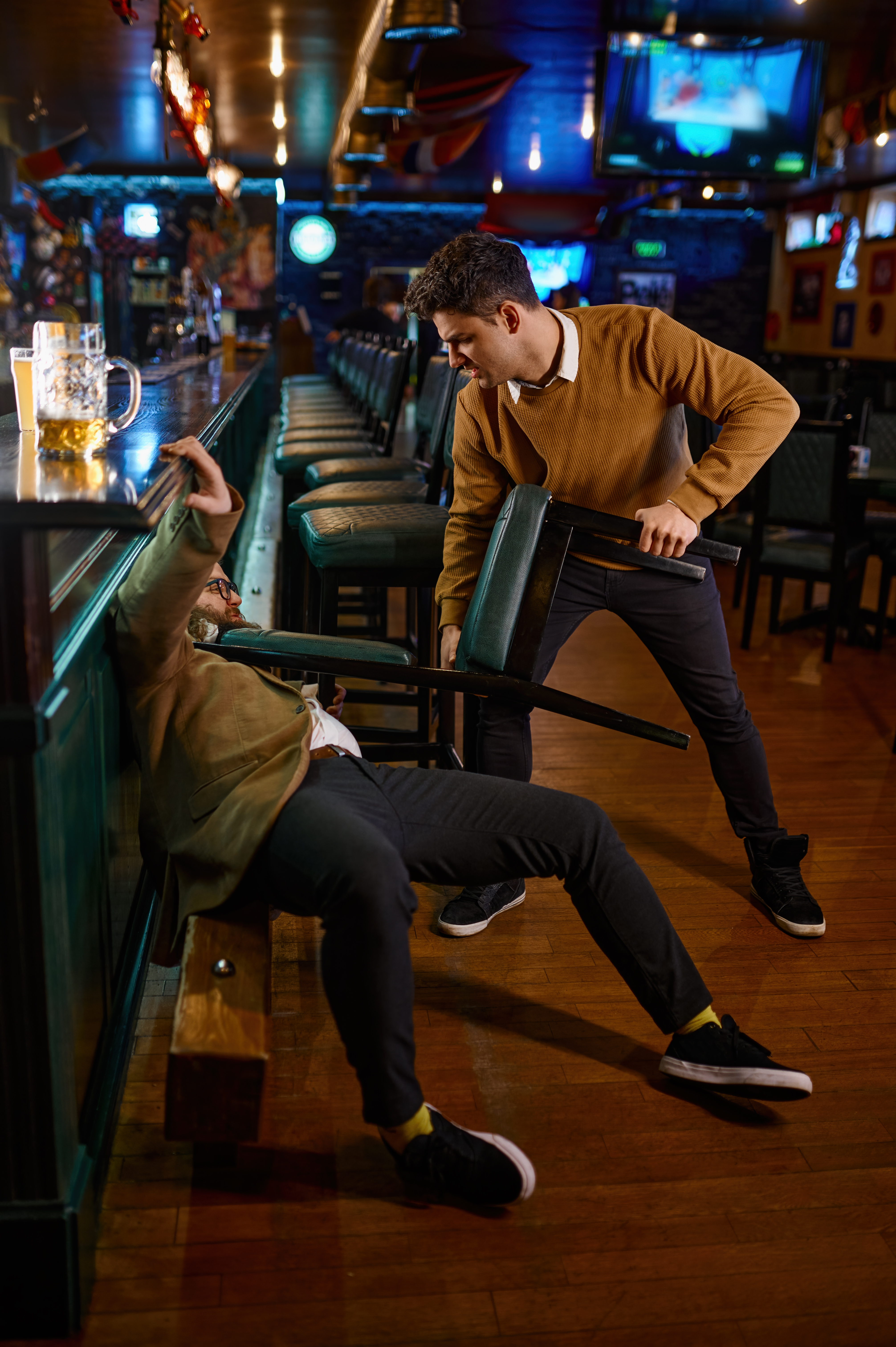
Civil battery requires actual contact — but it does not require serious injury. Any intentional, harmful, or offensive touching without your consent qualifies. A punch, a shove, an attack with an object: all of it falls within California's definition of battery. The severity of your injuries affects the value of your case, not whether you have one.
The Standard of Proof Is Lower Than You Think
In a criminal case, the prosecution must prove guilt beyond a reasonable doubt — one of the highest standards in law. In a civil case, we only need to show that it is more likely than not that the defendant is responsible. This is called a preponderance of the evidence. It is a meaningfully lower bar. A defendant who was acquitted in criminal court, or who was never charged at all, can still be found liable in civil court. The O.J. Simpson case is the most famous example, but this happens in ordinary cases every day.
You Don't Need to Know What to Call It
You don't need to arrive at our office with a legal theory already formed. What matters is what happened to you — where you were, who was involved, what they did, and what it cost you. We'll identify which claims apply. That's what the free consultation is for.
When the Person Who Hurt You Isn't the Only One Responsible
One of the most important questions in an assault and battery case isn't just who attacked you — it's where it happened and who controlled that environment.
When an assault or battery occurs at a bar, nightclub, apartment complex, parking structure, hotel, or other commercial property, the property owner or business operator may share legal responsibility. If they failed to provide adequate security, ignored prior incidents on the premises, or created conditions that made the attack foreseeable, they may be liable alongside — or instead of — the individual who hurt you.
This matters enormously for recovery. Individual attackers are often judgment-proof: they have no assets, no insurance, and no realistic ability to pay a judgment. Property owners and businesses are a different story. They carry commercial liability insurance, and that insurance is frequently the actual source of compensation in these cases.
If your assault occurred at a commercial property or venue, we'll evaluate the premises liability angle as part of your case. Our negligent security practice covers exactly this overlap.
What Compensation Can You Recover in a Civil Assault and Battery Case
A successful civil claim for assault and battery can recover damages across several categories:
- Medical expenses, including emergency treatment, surgery, physical therapy, and ongoing care
- Lost income if your injuries kept you from working during recovery
- Reduced earning capacity if your injuries have lasting effects on your ability to work
- Pain and suffering, including physical pain, emotional distress, and anxiety
- Psychological harm, including PTSD, depression, and trauma-related conditions that frequently follow violent incidents
- Punitive damages in cases involving especially egregious or malicious conduct — California courts can award these specifically to punish intentional wrongdoing
Because assault and battery are intentional acts, courts are permitted to consider punitive damages in ways they cannot in ordinary negligence cases. That is one reason civil claims for intentional violence can carry significant value even when the underlying injuries are not catastrophic.
Cases Involving a Minor Victim
When the victim of an assault or battery is a child, additional legal protections apply. California law extends the statute of limitations for minors, and the nature of the harm — both physical and psychological — is evaluated differently than in adult cases.
If your child was assaulted at school, at a park, at a recreational facility, or anywhere a responsible adult or institution had a duty of supervision, there may be claims against more than just the individual who caused the harm. We handle child injury cases with the same direct-access model we apply to every case — parents deal with us, not with support staff.
Why Clients Come to Quigley for Assault and Battery Claims
Assault and battery cases require a lawyer who understands how civil liability is constructed — and how insurance companies on the other side will try to minimize or deny it. Before founding this firm, Brennan Quigley spent years as a defense attorney for insurance carriers. He knows the arguments they use, the tactics they rely on, and the points in a case where they look for leverage.
We also keep our caseload deliberately small. Every client works directly with Brennan — not a paralegal, not a junior associate. When your case involves something as personal as a violent incident, that access matters. You'll know what's happening with your case because you'll hear it from the attorney handling it.

Frequently Asked Questions About Civil Assault and Battery Claims in California
Can I file a civil lawsuit for assault and battery if the police never arrested anyone?
Yes. A civil lawsuit is entirely separate from the criminal process. You do not need an arrest, a prosecution, or a conviction to pursue a civil claim. The decision to file a civil case is yours, and it does not depend on what law enforcement chooses to do.What if the person who attacked me has no money or assets?
The individual attacker's financial situation matters less when there are third-party defendants involved. If the assault occurred at a business, venue, apartment complex, or other commercial property, the property owner or operator may share liability — and their insurance is typically where recovery actually comes from. We evaluate every potential responsible party, not just the person who physically harmed you.Can someone be found liable in civil court even after being acquitted in criminal court?
Yes. The two systems use different standards of proof. A criminal acquittal means the prosecution couldn't prove guilt beyond a reasonable doubt. A civil case only requires showing that the defendant is more likely than not responsible — a significantly lower threshold. Civil liability after a criminal acquittal is not unusual.How long do I have to file a civil assault and battery lawsuit in California?
In most cases, California's statute of limitations gives you two years from the date of the incident to file a civil lawsuit. There are exceptions — cases involving minors, cases against government entities, and cases where the identity of the responsible party wasn't immediately known can all affect the timeline. The sooner you speak with an attorney, the more options you preserve.Does my situation qualify as assault and battery even if it wasn't a serious attack?
California's definitions are broader than most people assume. Civil battery requires intentional, harmful, or offensive contact — it does not require serious injury. Civil assault can be established without any physical contact at all. Whether your specific situation meets the legal threshold is exactly the kind of question our free consultation is designed to answer.
Talk to a San Diego Assault and Battery Attorney at No Cost
If you were hurt by another person's intentional conduct, you have legal options that exist completely outside of whatever the criminal system did or didn't do. We'll review your situation, explain what claims may apply, and tell you honestly what we think your case is worth. There's no charge for that conversation, and no obligation to move forward.