
10 Halloween Safety Tips for Parents in 2026
Halloween safety tips help parents reduce common risks by planning costumes, supervision, travel routes, candy checks, and communication before trick-or-treating begins. For Orlando families, the safest approach combines visible clothing, age-appropriate independence, close adult oversight, and a clear plan for emergencies, changing weather, busy roads, and custody schedules.
Why do Halloween safety tips matter?
Halloween is exciting, but it also creates unusual safety challenges. Children may be distracted by candy, costumes can limit visibility, and drivers may not expect pedestrians after dark. Crowded sidewalks, uneven walkways, open flames, severe weather, and unfamiliar homes can add risk.
Parents do not need to make the night stressful. A few simple decisions made before leaving home can help children enjoy trick-or-treating while adults remain prepared. Review the plan with every child, including what to do if someone becomes separated, feels uncomfortable, or needs help.
10 Halloween safety tips for parents
1. Choose a safe, visible costume
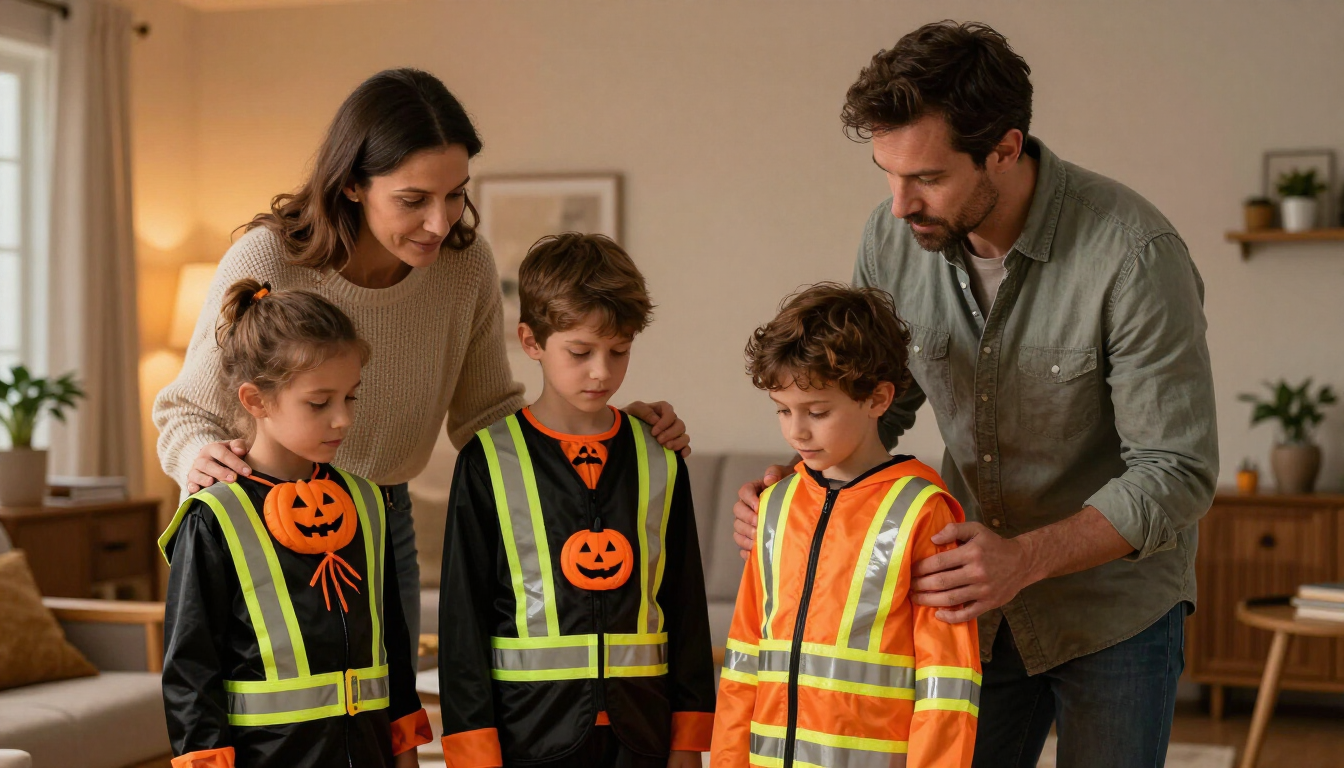
Select costumes that fit well and do not drag on the ground. Avoid masks that block peripheral vision, long capes that can catch on objects, and accessories with sharp edges. Use face paint instead of a mask when possible.
Improve visibility by adding:
- Reflective tape or bright details
- Glow sticks or small battery-powered lights
- Comfortable shoes with secure laces or straps
- A jacket or layer suitable for changing weather
Check costume accessories before leaving. Toy swords, wands, and similar props should be flexible, lightweight, and easy to carry.
2. Plan supervision by age and maturity
Young children should stay with a trusted adult. Older children may be ready for a short route with friends, but parents should consider maturity, neighborhood conditions, traffic, and the child’s ability to follow a plan.
Set expectations in advance: where children may go, when they must return, who they may contact, and what they should do if plans change. Supervision should be active rather than relying only on a phone or occasional check-in.
3. Use a familiar, well-lit route
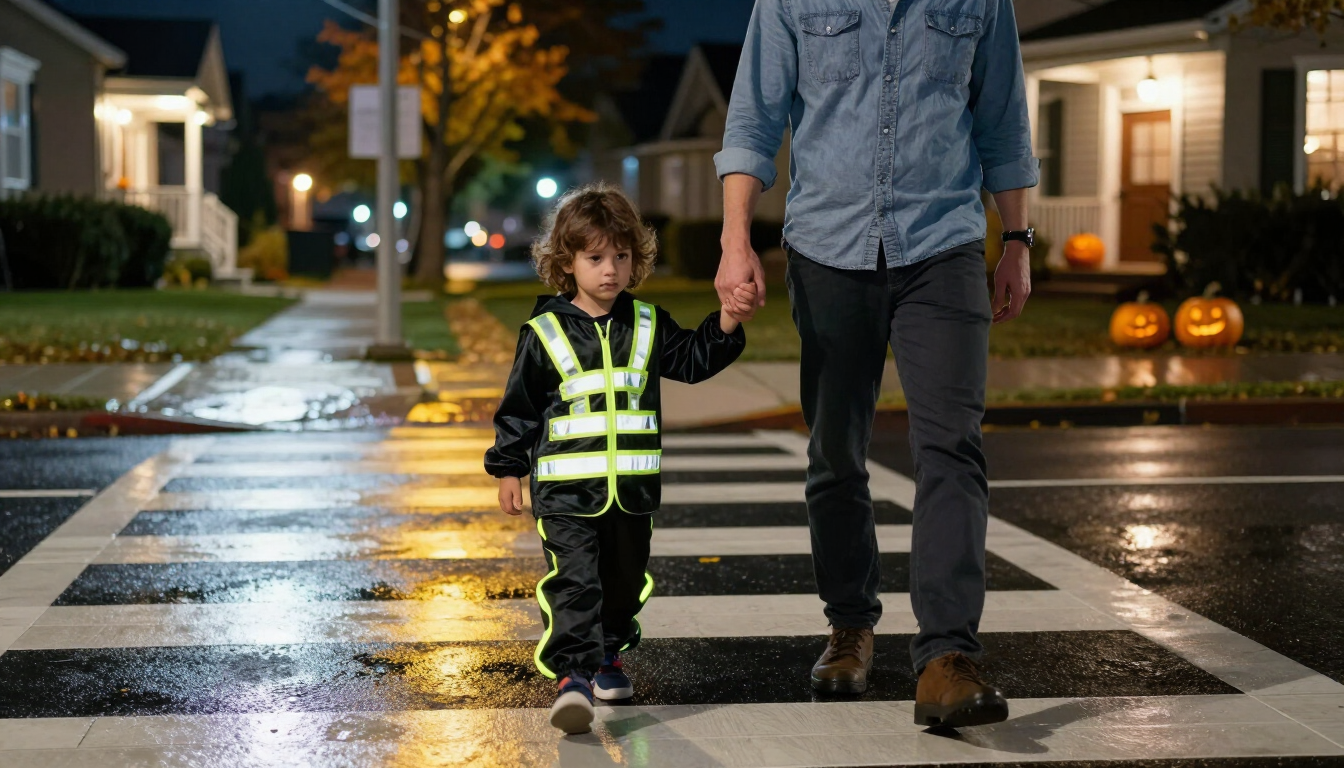
Choose sidewalks and streets your family knows. Avoid dark areas, vacant lots, construction zones, and roads without safe crossings. Stay on sidewalks whenever they are available, and cross only at corners, crosswalks, or other designated locations.
Review the route on a map before leaving. In Central Florida, also check the weather and plan for rain, lightning, heat, or slippery surfaces. A shorter route is often safer and more enjoyable than trying to visit every house.
4. Set a communication plan
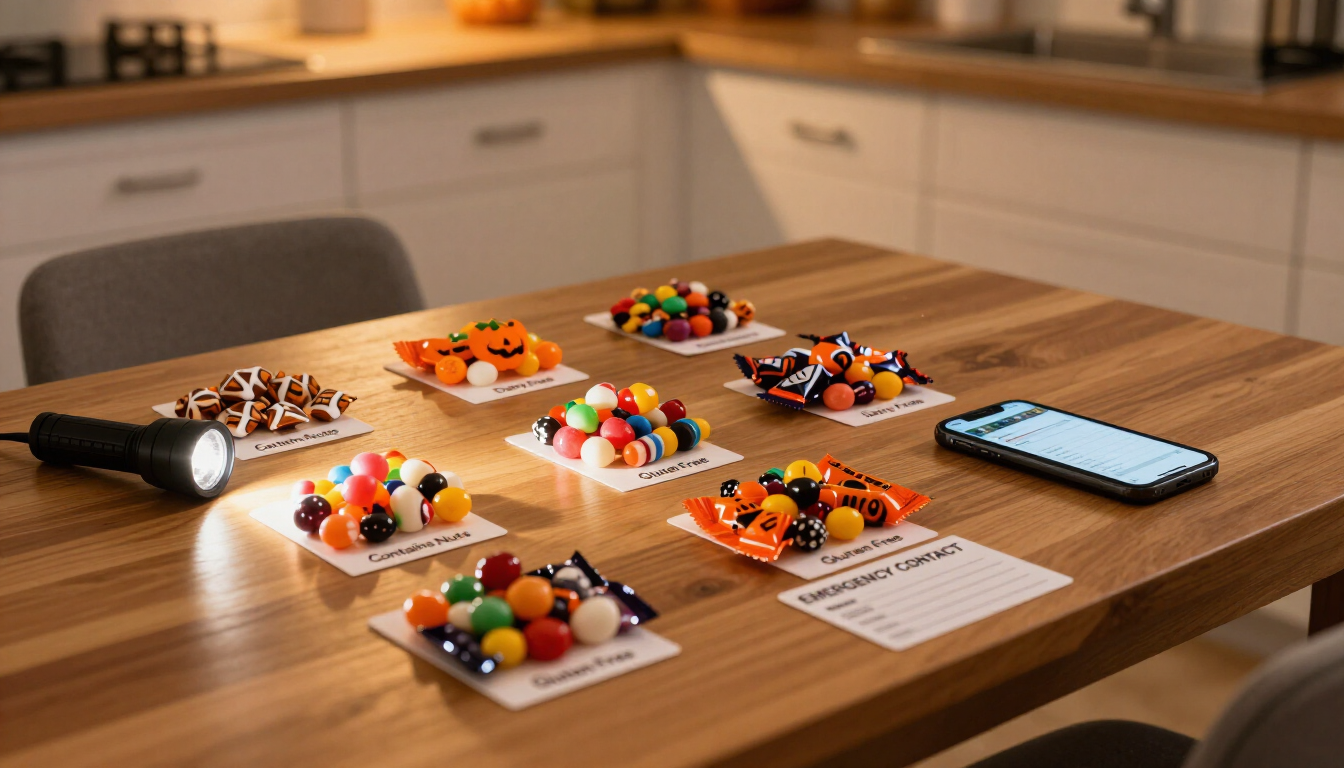
Every child should know how to reach a parent or another trusted adult. Younger children can carry an emergency contact card in a pocket. Older children should have a charged phone, but they should also know the meeting point if a phone stops working.
Use a simple family rule: if someone gets separated, children should stop, move to a well-lit public place, and ask a uniformed officer, event worker, or parent with children for help. Teach them never to leave the area with an unfamiliar person.
5. Talk about boundaries and body safety
Halloween can involve greetings, hugs, crowded spaces, and visits to unfamiliar homes. Remind children that they can say no to unwanted touch, step away from uncomfortable situations, and tell a trusted adult what happened.
Children should never enter a home or vehicle unless a parent or approved caregiver gives permission. Encourage them to trust their instincts and report behavior that feels unsafe, even if someone says it is a joke.
Food, traffic, and home safety
6. Inspect candy before eating
Tell children to wait until an adult checks their treats. Discard anything that is open, torn, homemade by an unknown source, or appears unusual. Check labels carefully for allergies and keep unsafe items away from children who have dietary restrictions.
Children should eat a meal or snack before trick-or-treating so they are less tempted to eat while walking. Adults should also account for choking hazards, especially for toddlers.
7. Be careful around cars
Drivers and pedestrians share responsibility for a safe night. Adults should model street safety by putting phones away, making eye contact with drivers, and crossing together. Children should not run between parked cars or dart into the street for candy.
If you are driving, slow down in residential areas, use headlights, and expect children to cross unexpectedly. Avoid distractions and never drive after drinking or using an impairing substance.
8. Keep decorations and flames controlled
If your family uses candles, choose battery-operated lights whenever possible. Keep decorations away from doors, walkways, stairs, heaters, and electrical cords. Make sure guests can clearly see steps and changes in elevation.
Pets may become frightened by costumes, doorbells, and crowds. Keep animals secured in a quiet area, and do not allow children to approach unfamiliar pets while trick-or-treating.
9. Prepare for allergies and medical needs
Children with allergies, asthma, diabetes, sensory sensitivities, or other medical needs may require extra planning. Carry needed medication according to the child’s care plan, and tell supervising adults what symptoms require immediate action.
Consider a teal pumpkin or another family-friendly signal when participating in allergy-conscious events. The key is to provide safe alternatives without making a child feel excluded.
10. Agree on holiday and custody logistics
For separated or co-parenting families, Halloween safety also includes a clear schedule. Confirm pickup times, locations, costume needs, allergy information, emergency contacts, and who will supervise the child. Put agreements in writing so everyone has the same details.
If a parenting plan already addresses holidays, review it early rather than waiting until Halloween night. For questions about an existing arrangement, contact our office or learn more about our family law support . Legal guidance can help parents focus on the child’s best interests and avoid preventable conflict.
A practical Halloween checklist
Use this checklist before your family leaves home:
- Costume fits securely and allows clear vision
- Reflective material, glow sticks, or lights are ready
- Route, meeting place, and return time are agreed upon
- Phone, emergency contact information, and medications are available
- Adult supervision and transportation plans are confirmed
- Candy will be inspected before children eat it
What should parents do if a child is separated?
Stay calm and follow the agreed plan. The child should go to the designated meeting point or remain in a visible public location. Adults should contact one another immediately, retrace the planned route, and ask event staff or law enforcement for help if needed.
Share a recent photo, the child’s clothing description, and any medical information with responders. Do not encourage children to wander in search of an adult. Practicing this plan briefly before Halloween can make it easier to follow under stress.
Frequently asked questions
Should young children trick-or-treat alone?
Generally, no. Young children should remain with a trusted adult who can supervise crossings, monitor interactions, and respond to emergencies. Older children may have more independence when their maturity and surroundings make it reasonable, but parents should set clear boundaries first.
What is the safest Halloween costume?
The safest costume fits comfortably, does not obstruct vision or movement, avoids sharp accessories, and includes reflective or illuminated elements. Comfortable closed-toe shoes can also reduce trips and falls.
When should parents inspect Halloween candy?
Inspect all treats before children eat them, preferably immediately after returning home. Discard opened or damaged items, review allergy labels, and follow each child’s medical guidance.
How can co-parents avoid Halloween disagreements?
Discuss the schedule, supervision, transportation, costumes, treats, medical needs, and communication plan early. Follow any existing parenting plan and document agreed changes. If the arrangement is unclear, contact us for information about family law options in Orlando.
Key takeaways for a safer Halloween
Halloween safety starts before trick-or-treating. Choose a visible costume, use a familiar route, supervise children appropriately, and create a communication plan everyone understands. Inspect treats, watch for traffic, secure decorations and pets, and prepare for allergies or medical needs. Co-parents should confirm holiday logistics early and follow their parenting plan. Before leaving home, review the checklist together and make sure every child knows where to go and whom to contact if something feels wrong. A few minutes of preparation can help Orlando families enjoy a calmer, safer night.